
SEO for Websites: How to Increase Organic Traffic
Dummy test article!

Having a website is one thing. Getting the right people to discover it, visit it, trust your business, and take action is another. This is where Website Marketing becomes important. Website Marketing is the process of promoting a website through different digital channels to attract visitors, build brand awareness, generate leads, and support business growth. It combines strategies such as search engine optimisation, content, etc. Your website can be the centre of your entire digital presence. But without the right marketing strategy, even a beautifully designed website may receive very little traffic or generate limited business. In this guide, we will explore what Website Marketing means, how it works, its benefits, important strategies, common mistakes, and practical ways to improve your website’s online performance. What Is Website Marketing? Website Marketing refers to the different methods used to attract targeted visitors to a website and encourage them to complete meaningful actions. • Buying a product • Enquiring about a service • Filling out a contact form • Booking a consultation • Calling a business • Downloading a resource • Joining an email list • Visiting important website pages Unlike a single advertising campaign, Website Marketing can involve several connected digital marketing activities working together. For example, a business might publish an SEO-focused blog, share that blog on social media, run paid advertisements to promote a service page. The website becomes the destination where different marketing channels come together. Why Is Website Marketing Important for Businesses? When prospective clients want to learn more about a business, they frequently visit your website first. A strong Website Marketing strategy helps make sure that people can find your website and understand what your business offers when they arrive. Effective Website Marketing can help businesses: • Increase website traffic • Improve online visibility • Attract targeted customers • Generate leads • Increase enquiries • Promote products and services • Build brand credibility • Improve customer engagement • Support online sales • Create long-term digital growth Consider a local digital marketing business. A potential customer may search for a marketing service, discover the business through Google, visit the website, read a blog article, check the services page, and eventually submit a contact form. Each stage is influenced by Website Marketing. How Does Website Marketing Work? Website Marketing works best when different strategies are connected instead of being treated as separate activities. Website Marketing Process Research → Website Optimisation → Traffic Generation → User Engagement → Conversion → Analysis → Improvement ResearchUnderstand your target audience, industry, competitors, and business goals. Website OptimisationImprove the website’s content, structure, design, speed, usability, and search visibility. Traffic Generation Bring relevant visitors through channels such as SEO, social media, paid advertising, content marketing, and email. User EngagementMake it simple for users to explore your website and provide them with helpful information. . Conversion.Encourage visitors to take the desired action through clear calls to action, strong offers, forms, or booking options. AnalysisMeasure traffic, engagement, leads, conversions, and other important performance indicators. ImprovementUtilise the findings to make ongoing improvements to the website and marketing plan.This cycle makes Website Marketing an ongoing process rather than a one-time task. Main Types of Website MarketingThere are several strategies that can be used to promote a website.Search Engine Optimisation for Website MarketingSEO helps websites become more visible for relevant organic searches.SEO activities can include:• Keyword research• Content optimisation• Page title optimisation• Internal linking• Technical SEO• Image optimisation• Local SEO• Link buildingA digital marketing website may, for instance, focus on searches for SEO services, social media marketing, website construction, or content marketing. The objective is not simply to rank for keywords. The goal is to attract people who are genuinely relevant to the business. Content Marketing for Website MarketingContent gives your audience a reason to visit your website.Useful content can include:• Blog posts• Guides• Case studies• Tutorials• Videos• FAQs• Infographics• Industry insights A well-written article can attract visitors through search engines and can also be repurposed for social media and email marketing. This makes content a valuable part of a long-term Website Marketing strategySocial Media MarketingSocial media platforms can direct interested users to your website Businesses can share:• Blog articles• Product pages• Service pages• Offers• Videos• Educational content• Case studiesWhile your website offers more in-depth information and conversion prospects, social media may aid in raising awareness. Paid AdvertisingPaid advertising can be used to send targeted traffic to specific website pages.Businesses may use paid campaigns for: • Lead generation• Product promotion• Service enquiries• Website traffic• Brand awareness• Retargeting The landing page is extremely important. Sending paid traffic to a poorly designed or unclear page can waste advertising budget.Email Marketing Email allows businesses to reconnect with people who already know the brand.Website links can be included in:• Newsletters• Product updates• Educational emails• Promotions• New blog announcements• Special offersEmail and Website Marketing can work together to bring interested users back to the website. Crucial Components of an Effective Website Marketing Plan A successful strategy should look beyond traffic. A Clear Website StructureVisitors should quickly understand:Who you are → What you provide → Why it matters → What they ought to do nextImportant pages may include:• Home• About• Services• Products• Blog• Contact• FAQ Strong Website ContentYour content should explain your offer clearly and answer the questions your customers are likely to have.Avoid filling pages with complicated marketing language. Write for real people. Strong Calls to ActionEvery important page should guide visitors toward a useful next step.Examples include:• Get Started• Contact Us• Book a Consultation• Request a Quote• Learn More• Shop Now Mobile-Friendly DesignMany visitors access websites from mobile devices. A website should therefore be easy to use across different screen sizes. Fast Loading ExperienceVisitors are less likely to remain engaged when a website feels slow or difficult to use. Trust SignalsVisitors need reasons to believe that your business is legitimate and capable. Trust elements can include:• Testimonials• Reviews• Case studies• Clear contact information• Professional branding• Policies• Certifications where relevantWebsite Marketing vs Social Media MarketingBoth strategies can support business growth, but they serve different
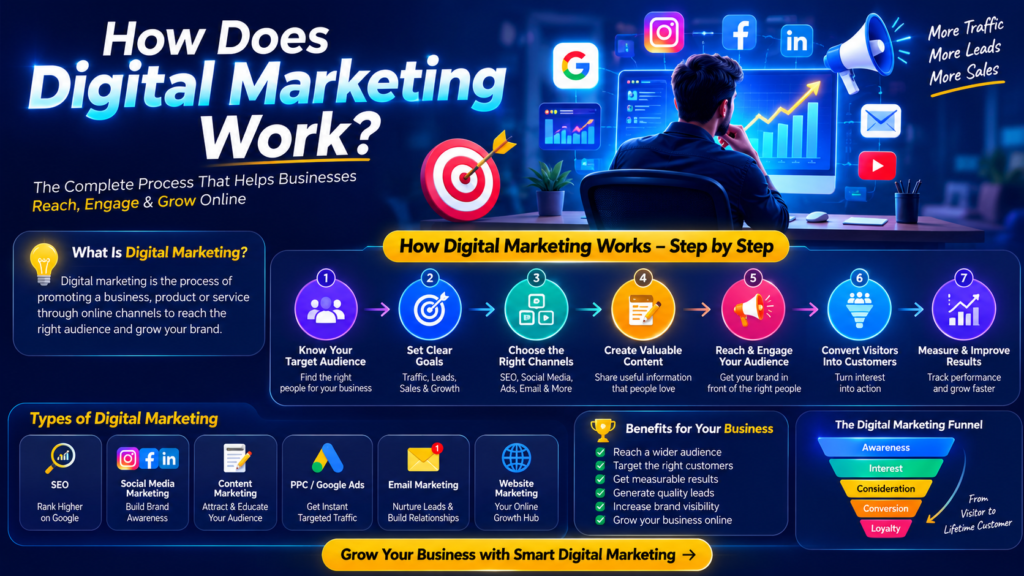
Digital marketing has become one of the most effective ways for businesses to reach customers online. Whether a business is small or large, having a strong digital presence can help attract new customers, build brand awareness, and increase sales.thats How Does Digital Marketing Work . steps how does digital marketing work? Digital marketing works by using different online channels such as search engines, social media, websites, content, email, and paid advertising to reach the right audience. The main goal is to attract potential customers, engage with them, turn them into customers, and build long-term relationships.In this guide, we explain what digital marketing is, how it works, its main types, its benefits, and how businesses can use it to grow online. What Is Digital Marketing? Digital marketing is the process of promoting a business, product, or service through digital channels and online platforms.Instead of depending only on traditional marketing methods such as newspapers, television, radio, or billboards, businesses can use online platforms to connect directly with their target audience.Some common digital marketing channels include:• Search engines• Social media• Websites• Email• Online advertising• Blogs and content• Video platformsFor example, when someone searches Google for a service, sees a business advertisement on Instagram, or reads a company’s blog, they are experiencing digital marketing. Why Is Digital Marketing Important? Digital marketing is important because most customers now spend a significant amount of time online. Businesses can use digital marketing to:• Reach a larger audience• Target specific customers• Increase website traffic• Generate leads• Build brand awareness• Increase sales• Measure marketing performance How Does Digital Marketing Work? Now that we understand what digital marketing means, let’s look at how digital marketing works step by step.Digital marketing generally follows a process that starts with understanding the audience and ends with measuring and improving results.Research → Strategy → Reach → Engage → Convert → Measure → ImproveLet’s understand each step. Main Types of Digital Marketing Digital marketing includes several different strategies and channels. Search Engine Optimization (SEO) Increasing a website’s exposure in natural search results is the main goal of SEO. Social Media Marketing Businesses use social media platforms to connect with audiences, share content, and promote their products or services. Content Marketing Content marketing involves creating useful and relevant content to attract and educate potential customers. Pay-Per-Click Advertising PPC is a paid advertising method where businesses pay when users interact with their advertisements. Email Marketing Email marketing is used to nurture leads, communicate with customers, promote offers, and build relationships. Website Marketing A website acts as an important part of digital marketing by providing information about the business and helping visitors take action. How Does the Digital Marketing Funnel Work? The digital marketing funnel explains how a person moves from discovering a business to becoming a customer.Awareness → Interest → Consideration → Conversion → RetentionAwarenessThe customer first discovers your business through Google, social media, advertisements, content, or another channel.InterestThe customer becomes interested and starts learning more about your business.ConsiderationThe customer compares your service or product with other available options.ConversionThe customer takes action, such as making a purchase or contacting your business.RetentionAfter the conversion, the business continues communicating with the customer and builds a long-term relationship. Benefits of Digital MarketingDigital marketing can provide several benefits for businesses.Wider ReachBusinesses can reach customers beyond their local area.Better TargetingDigital platforms allow businesses to target specific audiences based on different characteristics and behaviors.Measurable ResultsBusinesses can track campaign performance and understand what is working.Cost FlexibilityMany digital marketing channels offer options for different budgets.Brand AwarenessConsistent online marketing can help more people discover and remember a business.Lead GenerationDigital marketing can help businesses attract people who are actively interested in their products or services. How Long Does Digital Marketing Take to Work? There is no single answer because results depend on several factors.These include:• Industry• Competition• Marketing channel• Budget• Website quality• Content quality• Target audience• ConsistencySEO generally requires patience because organic visibility develops over time. Paid advertising can generate traffic more quickly, but campaigns still need proper targeting, testing, and optimization.Successful digital marketing should be viewed as a long-term strategy rather than a quick fix. Common Digital Marketing Mistakes to AvoidMany businesses make mistakes when starting their digital marketing journey.Some common mistakes include:• Targeting the wrong audience• Not setting clear goals• Ignoring SEO• Creating content without a strategy• Not tracking results• Expecting instant results• Using every platform without a clear purpose• Failing to improve campaigns based on dataAvoiding these mistakes can make your digital marketing efforts more focused and effective. How to Get Started With Digital MarketingIf you’re new to digital marketing, start with a simple process: Frequently Asked Questions What is digital marketing in simple words?Digital marketing is the process of promoting a business, product, or service through online channels such as search engines, social media, websites, email, and online advertising.How Does Digital Marketing Work How does digital marketing work for small businesses?Small businesses can use digital marketing to reach targeted customers, increase online visibility, generate leads, and promote their products or services.What are the main types of digital marketing?The main types include SEO, social media marketing, content marketing, PPC advertising, email marketing, and website marketing.How long does it take for digital marketing to yield results? The time required depends on the strategy, competition, budget, industry, and other factors. Some paid campaigns can produce traffic quickly, while SEO usually takes longer.Can digital marketing increase sales?Yes. When properly planned and executed, digital marketing can help businesses attract relevant visitors, generate leads, build trust, and increase conversions. ConclusionSo, how does digital marketing work?Digital marketing works through a connected process of understanding your audience, setting goals, choosing the right channels, creating valuable content, reaching potential customers, converting them into customers, and continuously measuring results.From SEO and social media to paid advertising and content marketing, every channel can play a different role in helping a business grow online.The most important thing is not simply being present online. It is having the right digital marketing strategy and consistently improving it based on real results.At UjwalTandon.com, we help businesses build

People do not always become customers the first time they discover a business. Before making a decision, they often search for information, compare options, watch videos, read articles, and look for answers to their questions. This is where Content Marketing becomes valuable. A digital marketing strategy known as “content marketing” concentrates on producing and disseminating relevant, helpful, and consistent material in order to draw in the appropriate audience. Instead of constantly asking people to buy, content helps educate them, solve problems, build trust, and move them closer to taking action. For businesses, Content Marketing can support brand awareness, organic traffic, customer engagement, lead generation, and long-term online growth. Content may become one of a brand’s most valuable assets when it is integrated with SEO, social media, websites, and other digital marketing initiatives. What Is Content Marketing? Content Marketing is the strategic creation and distribution of content designed to provide value to a specific audience while supporting business objectives. The content can take many forms, including: The important part is not simply creating content. The content needs to have a purpose. For example, a digital marketing business could publish an article explaining how SEO works. A reader may find that article through search, learn something useful, become familiar with the brand, and eventually enquire about SEO services. That is how Content Marketing can connect useful information with business growth. Why Is Content Marketing Important for Businesses? Content may become one of a brand’s most valuable assets when it is integrated with SEO, social media, websites, and other digital marketing initiatives.Useful content gives businesses an opportunity to become part of that research process. A well-planned Content Marketing strategy can help you: For example, a company selling website development services could create content around website speed, mobile design, website security, and common development mistakes. Before they are even prepared to make a purchase, someone looking for such subjects could find the business. By the time they need a service, the business is already familiar to them. How Does Content Marketing Work? Successful Content Marketing follows a journey rather than a single post. Content Marketing Process Audience Research → Content Strategy → Content Creation → Distribution → Engagement → Conversion → Analysis → Improvement 1. Audience Research First, identify who you want to reach. Understand their: 2. Content Strategy Decide what topics you will cover, which channels you will use, and what each piece of content is supposed to achieve. 3. Content Creation Create original and useful content that matches your audience’s needs. 4. Content Distribution Publish the content through suitable channels such as your website, social media platforms, email, or video platforms. 5. Engagement Monitor reactions, comments, shares, messages, and other interactions. 6. Conversion Guide interested users toward a meaningful action such as contacting your business, subscribing, booking a consultation, or making a purchase. 7. Analysis Measure results and identify what type of content performs best. 8. Improvement Use the data to refine future topics, formats, distribution, and calls to action. This makes Content Marketing an ongoing process rather than a one-time campaign. Types of Content Marketing No single model is suitable for all types of businesses. Different customer journey phases might benefit from different kinds of content.Blog Content Blog articles are useful for answering questions, targeting search queries, explaining concepts, and attracting organic visitors. A business can create articles around: Video Content Videos can explain complex topics quickly and demonstrate products, services, or processes. Examples include: Social Media Content Social media allows businesses to turn ideas into smaller, easily consumable pieces of content. Examples include: Email Content Businesses may maintain contact with their current audience by using email marketing. Content can include: Case Studies Case studies demonstrate how a good or service assisted in resolving an actual issue.They can be especially useful for service-based businesses because they provide practical evidence of expertise. Content Marketing and SEO Content Marketing and SEO work extremely well together. SEO helps people discover your website through search engines, while content gives those visitors a reason to visit and stay. A strong combination can involve: Keyword Research → Search Intent → Useful Content → On-Page SEO → Internal Linking → Organic Visibility For example, instead of creating an article simply because a keyword has high search volume, you should first understand what the searcher wants. Someone seeking advice is searching for **“social media marketing tips”**. It’s possible that someone looking for **”social media marketing services”** has commercial motivation. Understanding that difference can help you create content that matches the user’s expectations. How to Create an Effective Content Marketing Strategy A good strategy starts with business objectives rather than random content ideas. Set Clear Goals Decide what you want your content to achieve. Possible goals include: Understand Your Audience Make unique, practical content that speaks to the requirements of your audience.Ask: Who are they? What problems do they have? What information are they searching for? What might stop them from buying? The answers can become your content topics. Build Content Pillars Content pillars are broad subjects your brand regularly talks about. For a digital marketing website such as Ujwaltandon.com, possible pillars could include: These topics can then be divided into smaller articles, videos, and social posts. Create a Content Calendar Planning content in advance makes publishing more consistent. A simple calendar can include: Day Content Type Example Monday Educational SEO Tip Tuesday Social Post Marketing Mistake Wednesday Blog Digital Marketing Guide Thursday Video Quick Tutorial Friday Promotional Service Highlight This is only an example. Your calendar should match your audience and business goals. How to Create Content People Actually Want to Read Creating content is easy. Creating content that people care about is harder. Start with the audience’s problem. Instead of asking: “What should I post today?” Ask: “What can I help my audience understand today?” Useful content should aim to be: You should also avoid unnecessary repetition. Readers should feel that every section adds something useful. Common Content Marketing Mistakes Poor results do not always mean content

Social media is no longer just a place where people share photos, watch videos, or chat with friends. It has become a powerful space where businesses can introduce themselves, communicate with customers, showcase their work, and generate new opportunities. **Social Media Marketing** is crucial in this situation.Social Media Marketing is the use of social platforms to promote a brand, connect with a target audience, build trust, and achieve specific business goals. A good social media presence does not happen by simply posting something every day. It requires a clear strategy, useful content, creative communication, and regular performance analysis. For a startup, local company, freelancer, e-commerce store, or established brand, the right Social Media Marketing strategy can turn social platforms into a valuable part of the overall digital marketing system. What Is Social Media Marketing? Social Media Marketing is the process of using platforms such as Instagram, Facebook, LinkedIn, YouTube, and other social networks to achieve marketing and business objectives. It can involve both organic activities and paid campaigns. For example, a business may use social media to: The most important part is having a reason behind the activity. Posting without knowing what you want to achieve can create plenty of content but very little business value. Effective Social Media Marketing begins with understanding the audience and then creating content that gives them a reason to stop, watch, read, interact, or take action. Why Does Social Media Marketing Matter? A website may explain what your business does, but social media gives people an opportunity to see the people and ideas behind the business. It can help potential customers become familiar with a brand before they are ready to buy. A strong Social Media Marketing approach can support businesses by helping them: For example, imagine someone is looking for a digital marketing professional. They may first discover a service provider through an Instagram reel, then visit the website, read a blog post, and finally contact the business. Social media can therefore become one part of a larger customer journey. How Does Social Media Marketing Work? A successful Social Media Marketing campaign usually follows a process rather than relying on random posting. Social Media Marketing Process Audience Research → Goal Setting → Platform Selection → Content Planning → Content Creation → Publishing → Engagement → Analysis → Improvement 1. Audience Research Start by understanding the people you want to reach. Consider their: 2. Goal Setting Decide what the campaign should accomplish. Possible goals include: 3. Platform Selection You do not need to be everywhere. Choose platforms that match your audience and the type of content you plan to create. 4. Content Planning Create topics and content themes in advance instead of deciding what to post at the last minute. 5. Content Creation Turn your ideas into posts, videos, carousels, stories, graphics, or other formats. 6. Publishing and Engagement Publish consistently and interact with people who comment, share, or send messages. 7. Analysis and Improvement Review the results and use the data to improve your next campaign. This process makes Social Media Marketing more strategic and less dependent on guesswork. Types of Social Media Marketing There are several approaches businesses can use depending on their objectives. Organic Social Media Marketing Organic marketing refers to unpaid content and interactions. Examples include: Organic content is particularly useful for developing a recognizable brand and maintaining relationships with an existing audience. Paid Social Media Marketing Paid advertising allows businesses to promote content to selected audiences. Campaign objectives can include: The advantage of paid campaigns is greater control over audience targeting, budget, messaging, and campaign objectives. Influencer and Creator Marketing Businesses can collaborate with relevant creators to introduce their products or services to established audiences. The best partnership is not always the creator with the largest following. Relevance, audience quality, credibility, and content fit can matter more. Social Media Content Marketing This focuses on creating useful material that helps or entertains the audience. Examples include: Choosing the Right Social Media Platform Every platform has a different environment and audience. Instagram A strong option for visual storytelling, reels, personal branding, lifestyle content, products, and creative businesses. Facebook Useful for community-building, local businesses, advertisements, updates, and customer communication. LinkedIn Well suited to professional services, B2B marketing, consulting, agencies, and personal brands. YouTube Useful for tutorials, reviews, educational content, demonstrations, and longer videos. The right choice depends on your business. A company should not create accounts on every platform simply because they exist. Creating a Successful Social Media Marketing Strategy A social media strategy should connect content with business objectives. Define Your Brand Voice Decide how the business should sound online. Your communication might be: Consistency makes the brand easier to recognise. Create Content Pillars Instead of posting unrelated topics, create a few recurring categories. For a digital marketing business, content pillars could include: Balance Different Content Types Not every post should sell something. A useful content mix can include: Educate + Entertain + Build Trust + Promote For instance, you might teach a useful marketing technique on Monday, share a short industry insight on Wednesday, and promote a service later in the week. Use Strong Visual Content Good design can make a message easier to notice and understand. Images, videos, carousels, animations, and short-form videos can all play a role in a modern content strategy. Include a Clear Call to Action Tell people what you want them to do next. Examples include: Social Media Marketing Content Ideas for Businesses Businesses sometimes struggle because they run out of things to post. Here are some practical ideas: One useful blog article can also be transformed into several social posts, giving your content more value. Social Media Marketing Mistakes to Avoid A weak strategy often comes from focusing on activity rather than purpose. Common mistakes include: A large follower count does not automatically mean successful marketing. A smaller audience that regularly engages, visits your website, requests information, or becomes customers can be much more valuable. How to Measure Social Media Marketing Results Data
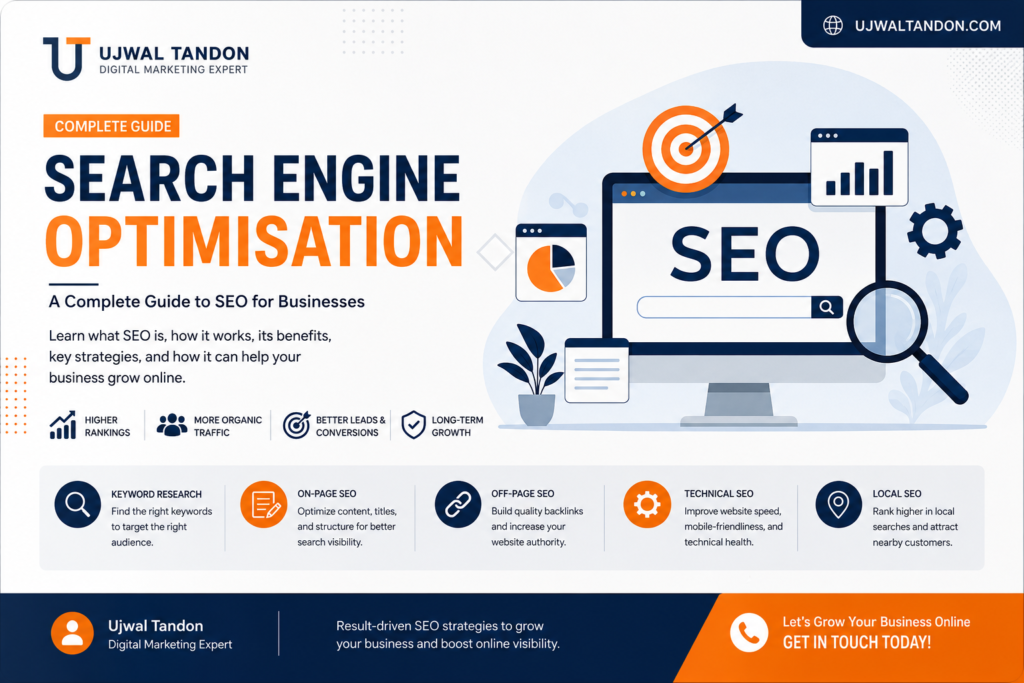
Having a website is insufficient in the modern digital world.Your potential customers need to be able to find your website when they search for products, services, or information online. This is where Search Engine Optimisation becomes important. Enhancing a website to make it show up more prominently in organic search results is known as search engine optimisation, or SEO.A well-planned SEO strategy can help businesses increase visibility, attract relevant visitors, build credibility, and generate more opportunities online. Whether you run a small business, personal brand, e-commerce store, or professional service website, Search Engine Optimisation can become an important part of your digital marketing strategy. What Is Search Engine Optimisation? The technique of enhancing various elements of a website to aid search engines in comprehending its content and presenting it to visitors for pertinent queries is known as search engine optimisation.Search engines such as Google use automated systems to discover, understand, and rank web pages. When your website is properly optimised, search engines have a better understanding of what your pages are about. SEO can involve: The goal is not simply to rank for keywords. The real goal is to attract the right audience and provide useful information that satisfies their search intent. How Does Search Engine Optimisation Work? Search engines generally follow several steps before displaying a webpage in search results. The Basic SEO Process User Search → Crawling → Indexing → Understanding Search Intent → Ranking → Website Visit 1. Crawling Search engines use automated programs to discover webpages and follow links across websites. 2. Indexing After discovering a page, the search engine analyses and stores information about that page in its index. 3. Understanding Search Intent Search engines try to understand what a user actually wants when they type a query. For example, someone searching for “how does SEO work” probably wants educational information, while someone searching for “SEO services” may be looking for a service provider. 4. Ranking Search engines evaluate many signals to determine which pages are useful and relevant for a particular search. 5. Showing Results The search engine displays the pages it considers most relevant to the user’s query. This is why effective Search Engine Optimisation requires more than simply adding keywords to a webpage. Why Is Search Engine Optimisation Important for Businesses? Potential clients may find your company more easily if you have a strong internet presence.Search Engine Optimisation can help businesses: One major advantage of SEO is that organic visibility can continue generating traffic after the initial optimisation and content work has been completed. However, SEO is a long-term strategy. Results depend on factors such as competition, website authority, content quality, technical health, industry, and consistency. Types of Search Engine Optimisation Search Engine Optimisation is not one single activity. It consists of several areas that work together. On-Page SEO On-page SEO focuses on elements that exist directly on your webpages. Important areas include: Good on-page SEO makes your content easier for both search engines and visitors to understand. Off-Page SEO Off-page SEO focuses on activities outside your website that can contribute to its authority and reputation. Examples include: The quality and relevance of links are generally more important than simply collecting a large number of backlinks. Technical SEO Technical SEO focuses on the technical foundation of your website. It can include: A technically healthy website gives search engines a better opportunity to crawl and understand its pages. Local SEO Local SEO is particularly useful for businesses serving specific geographic areas. It can involve: For example, a digital marketing professional targeting customers in a specific city can optimise their website for relevant local searches. Search Engine Optimisation vs Paid Advertising SEO and paid advertising are different digital marketing strategies. Search Engine Optimisation Paid Advertising Focuses on organic visibility Focuses on paid visibility Usually takes time to build Can generate visibility quickly Does not charge for every organic click Often charges based on clicks or impressions Builds long-term organic presence Useful for short-term campaigns Requires ongoing optimisation Requires ongoing advertising budget For many businesses, the best approach is not choosing one over the other. Combining SEO with paid advertising can help businesses capture both immediate and long-term opportunities. Key Elements of a Successful Search Engine Optimisation Strategy A successful SEO campaign starts with understanding the business, audience, competitors, and search behaviour. Important elements include: Keyword Research Identify terms your potential customers actually search for. Look at: High-Quality Content Create content that answers real questions and provides useful information. Avoid creating pages simply to include keywords. Every page should have a clear purpose. On-Page Optimisation Optimise titles, headings, content, URLs, images, and internal links so that each page clearly communicates its topic. Technical Optimisation Make sure search engines can crawl, understand, and index your important pages. Link Building Earn relevant and trustworthy links from websites that can provide genuine value and authority. Performance Tracking Monitor organic traffic, rankings, impressions, clicks, conversions, and other relevant metrics to understand what is working. How to Improve Search Engine Optimisation on Your Website If you are starting with SEO, focus on the fundamentals first. Simple SEO Checklist Consistency is one of the most important parts of Search Engine Optimisation. Publishing one article and never updating your website is unlikely to create sustainable growth. Common Search Engine Optimisation Mistakes to Avoid Even well-intentioned SEO efforts can cause problems when the fundamentals are ignored. Some common mistakes include: The purpose of Search Engine Optimisation should always be to create a better experience for your audience while making your website easier for search engines to understand. How Long Does Search Engine Optimisation Take? There is no universal timeline for SEO results. Some websites may see improvements relatively quickly, while competitive industries can require much more time and effort. Results can depend on: For this reason, businesses should treat SEO as an ongoing investment rather than a one-time task. How to Measure Search Engine Optimisation Performance Tracking performance helps you understand whether your strategy is moving in the right direction. Useful SEO