
Social media is no longer just a place where people share photos, watch videos, or chat with friends. It has become a powerful space where businesses can introduce themselves, communicate with customers, showcase their work, and generate new opportunities.
**Social Media Marketing** is crucial in this situation.
Social Media Marketing is the use of social platforms to promote a brand, connect with a target audience, build trust, and achieve specific business goals. A good social media presence does not happen by simply posting something every day. It requires a clear strategy, useful content, creative communication, and regular performance analysis.
For a startup, local company, freelancer, e-commerce store, or established brand, the right Social Media Marketing strategy can turn social platforms into a valuable part of the overall digital marketing system.
What Is Social Media Marketing?
Social Media Marketing is the process of using platforms such as Instagram, Facebook, LinkedIn, YouTube, and other social networks to achieve marketing and business objectives.
It can involve both organic activities and paid campaigns.
For example, a business may use social media to:
- Introduce its products or services
- Share educational content
- Publish videos and reels
- Answer customer questions
- Build a community
- Promote special offers
- Send visitors to a website
- Collect leads
- Run targeted advertisements
- Strengthen brand recognition
The most important part is having a reason behind the activity. Posting without knowing what you want to achieve can create plenty of content but very little business value.
Effective Social Media Marketing begins with understanding the audience and then creating content that gives them a reason to stop, watch, read, interact, or take action.

Why Does Social Media Marketing Matter?
A website may explain what your business does, but social media gives people an opportunity to see the people and ideas behind the business.
It can help potential customers become familiar with a brand before they are ready to buy.
A strong Social Media Marketing approach can support businesses by helping them:
- Reach new audiences
- Increase brand visibility
- Develop customer relationships
- Showcase expertise
- Generate website visits
- Build trust
- Attract potential leads
- Promote services and products
- Encourage repeat engagement
- Stay visible in competitive markets
For example, imagine someone is looking for a digital marketing professional. They may first discover a service provider through an Instagram reel, then visit the website, read a blog post, and finally contact the business.
Social media can therefore become one part of a larger customer journey.
How Does Social Media Marketing Work?
A successful Social Media Marketing campaign usually follows a process rather than relying on random posting.
Social Media Marketing Process
Audience Research → Goal Setting → Platform Selection → Content Planning → Content Creation → Publishing → Engagement → Analysis → Improvement
1. Audience Research
Start by understanding the people you want to reach.
Consider their:
- Needs
- Interests
- Problems
- Location
- Age group
- Buying habits
- Preferred content formats
2. Goal Setting
Decide what the campaign should accomplish.
Possible goals include:
- Increasing awareness
- Growing website traffic
- Generating leads
- Promoting a service
- Increasing sales
- Building a community
3. Platform Selection
You do not need to be everywhere.
Choose platforms that match your audience and the type of content you plan to create.
4. Content Planning
Create topics and content themes in advance instead of deciding what to post at the last minute.
5. Content Creation
Turn your ideas into posts, videos, carousels, stories, graphics, or other formats.
6. Publishing and Engagement
Publish consistently and interact with people who comment, share, or send messages.
7. Analysis and Improvement
Review the results and use the data to improve your next campaign.
This process makes Social Media Marketing more strategic and less dependent on guesswork.
Types of Social Media Marketing
There are several approaches businesses can use depending on their objectives.
Organic Social Media Marketing
Organic marketing refers to unpaid content and interactions.
Examples include:
- Instagram posts
- LinkedIn updates
- Stories
- Reels
- Educational videos
- Customer conversations
- Community posts
Organic content is particularly useful for developing a recognizable brand and maintaining relationships with an existing audience.
Paid Social Media Marketing
Paid advertising allows businesses to promote content to selected audiences.
Campaign objectives can include:
- Website traffic
- Lead generation
- Product sales
- App promotion
- Awareness
- Remarketing
The advantage of paid campaigns is greater control over audience targeting, budget, messaging, and campaign objectives.
Influencer and Creator Marketing
Businesses can collaborate with relevant creators to introduce their products or services to established audiences.
The best partnership is not always the creator with the largest following. Relevance, audience quality, credibility, and content fit can matter more.
Social Media Content Marketing
This focuses on creating useful material that helps or entertains the audience.
Examples include:
- How-to videos
- Industry tips
- Tutorials
- Frequently asked questions
- Case studies
- Mistake-based content
- Behind-the-scenes posts
Choosing the Right Social Media Platform
Every platform has a different environment and audience.
A strong option for visual storytelling, reels, personal branding, lifestyle content, products, and creative businesses.
Useful for community-building, local businesses, advertisements, updates, and customer communication.
Well suited to professional services, B2B marketing, consulting, agencies, and personal brands.
YouTube
Useful for tutorials, reviews, educational content, demonstrations, and longer videos.
The right choice depends on your business. A company should not create accounts on every platform simply because they exist.
Creating a Successful Social Media Marketing Strategy
A social media strategy should connect content with business objectives.
Define Your Brand Voice
Decide how the business should sound online.
Your communication might be:
- Professional
- Friendly
- Educational
- Bold
- Conversational
- Inspirational
Consistency makes the brand easier to recognise.
Create Content Pillars
Instead of posting unrelated topics, create a few recurring categories.
For a digital marketing business, content pillars could include:
- SEO tips
- Social media advice
- Website insights
- Digital marketing mistakes
- Case studies
- Business growth ideas
Balance Different Content Types
Not every post should sell something.
A useful content mix can include:
Educate + Entertain + Build Trust + Promote
For instance, you might teach a useful marketing technique on Monday, share a short industry insight on Wednesday, and promote a service later in the week.
Use Strong Visual Content
Good design can make a message easier to notice and understand.
Images, videos, carousels, animations, and short-form videos can all play a role in a modern content strategy.
Include a Clear Call to Action
Tell people what you want them to do next.
Examples include:
- Visit the website
- Send a message
- Book a consultation
- Read the full article
- Request a quote
- Learn more
Social Media Marketing Content Ideas for Businesses
Businesses sometimes struggle because they run out of things to post.
Here are some practical ideas:
- Answer common customer questions
- Share industry tips
- Show your process
- Introduce team members
- Share client success stories
- Explain common mistakes
- Create short tutorials
- Compare solutions
- Post behind-the-scenes content
- Turn blog posts into social content
- Share customer feedback
- Discuss current industry topics
One useful blog article can also be transformed into several social posts, giving your content more value.
Social Media Marketing Mistakes to Avoid
A weak strategy often comes from focusing on activity rather than purpose.
Common mistakes include:
- Posting without a defined objective
- Making every post promotional
- Copying competitors
- Buying followers
- Ignoring comments
- Using poor-quality visuals
- Publishing inconsistently
- Targeting an overly broad audience
- Using the same message everywhere
- Looking only at follower numbers
A large follower count does not automatically mean successful marketing.
A smaller audience that regularly engages, visits your website, requests information, or becomes customers can be much more valuable.
How to Measure Social Media Marketing Results
Data helps you understand whether your efforts are actually contributing to your goals.
Important measurements can include:
| Metric | What It Helps You Understand |
| Reach | How many people saw your content |
| Engagement | How audiences interacted with content |
| Video Views | Interest in video content |
| Website Clicks | Traffic generated from social platforms |
| Leads | Potential customers generated |
| Conversions | Actions completed by users |
| Cost Per Lead | Efficiency of paid campaigns |
| Return on Ad Spend | Revenue generated relative to advertising cost |
The best metrics depend on the campaign.
For awareness, reach may be useful. For lead generation, qualified enquiries matter more. For sales campaigns, conversions and revenue are more meaningful than likes.
Organic vs Paid Social Media Marketing
Both approaches have different strengths.
| Organic Social Media Marketing | Paid Social Media Marketing |
| Uses unpaid content | Uses advertising budget |
| Builds ongoing audience relationships | Expands targeted reach |
| Depends on content consistency | Depends on campaign optimisation |
| Helpful for community building | Helpful for specific campaigns |
| Can support long-term brand growth | Can create faster exposure |
Many businesses can use both together.
Organic content can establish credibility, while paid advertising can help put selected offers or content in front of carefully defined audiences.
How Long Does Social Media Marketing Take to Work?
There is no fixed period in which every business will see results.
Performance can be influenced by:
- Industry competition
- Audience size
- Content quality
- Platform selection
- Brand awareness
- Posting consistency
- Offer quality
- Advertising budget
- Campaign optimisation
Organic growth generally requires patience because people need time to discover, recognise, and trust a brand.
Paid advertising may increase reach faster, but faster exposure does not guarantee successful results. The creative, targeting, offer, landing page, and campaign objective all matter.
The better approach is to treat Social Media Marketing as an ongoing system rather than a quick promotion.
How to Improve Your Social Media Marketing
Use this checklist as a starting point:
Social Media Marketing Checklist
- ✅ Define your audience
- ✅ Set measurable goals
- ✅ Choose relevant platforms
- ✅ Establish content pillars
- ✅ Create a content calendar
- ✅ Maintain consistent branding
- ✅ Mix educational and promotional content
- ✅ Experiment with videos and short-form content
- ✅ Respond to audience interactions
- ✅ Test different content ideas
- ✅ Track important metrics
- ✅ Improve the strategy based on performance
Small improvements made consistently can become more valuable than occasional bursts of activity.
Is Social Media Marketing Worth It?
For many businesses, the answer is yes, especially when social media is connected to a wider digital marketing strategy.
Social media can help businesses stay visible, demonstrate expertise, communicate their personality, and create multiple touchpoints with potential customers.
However, success does not come from simply being active. The real value comes from reaching the right people with the right message and giving them a clear reason to engage.
That means effective Social Media Marketing should combine creativity with strategy.
Social Media Marketing Services by Ujwal Tandon
At Ujwal Tandon, Social Media Marketing can be integrated with a broader digital marketing approach based on your business goals.
A strategy can be developed around your audience, industry, brand identity, and desired outcomes.
Services Can Include:
- Social media strategy
- Content planning
- Social media management
- Creative content development
- Reels and short-form video planning
- Paid social advertising
- Audience research
- Competitor analysis
- Performance reporting
- Campaign optimisation
The goal is to create a social media presence that supports your wider online marketing efforts rather than treating each platform as a separate activity.
Ready to Grow Your Brand Online?
A stronger social media presence starts with a strategy that fits your business.
Get in touch with Ujwal Tandon to discuss your digital marketing goals and create a Social Media Marketing approach built around your audience.
Frequently Asked Questions About Social Media Marketing
1. What is Social Media Marketing?
Social Media Marketing is the use of social platforms to promote a business, communicate with customers, build awareness, generate leads, and support business objectives.
2. Why is Social Media Marketing important?
It can help businesses reach new audiences, build relationships, improve visibility, showcase expertise, and create opportunities for traffic, leads, and sales.
3. Which social media platform is best for business?
There is no universal best platform. The right choice depends on your audience, industry, content type, and business goals.
4. How often should businesses post?
There is no single posting frequency that works for every brand. A consistent schedule with useful content is generally more valuable than posting frequently without a clear purpose.
5. Is paid advertising part of Social Media Marketing?
Yes. Paid social advertising is an important part of Social Media Marketing and can be used to reach selected audiences and achieve specific campaign goals.
6. Can Social Media Marketing help small businesses?
Yes. Small businesses can use social media to build local awareness, showcase their expertise, communicate with customers, and attract potential leads.
7. How long does Social Media Marketing take to produce results?
Results vary depending on the platform, business, audience, content, competition, campaign strategy, and budget. Sustainable growth usually requires consistent effort.
8. Should a business use every social media platform?
No. It is often more effective to focus on the platforms where your target customers are most likely to spend time.
9. Does having more followers mean better marketing?
Not necessarily. Relevant engagement, qualified leads, website traffic, and conversions can be more important indicators of business success.
10. Why hire a Social Media Marketing professional?
A professional can help with strategy, content planning, audience targeting, advertising, analytics, and optimisation, making the overall process more structured and goal-focused.
Conclusion
Social Media Marketing has evolved into much more than maintaining a social media page. It is a way for businesses to become visible, communicate with their audience, demonstrate their expertise, and create meaningful opportunities.
The strongest results come from combining the right platform, useful content, clear messaging, consistent branding, audience understanding, and regular optimisation.
Whether your goal is to increase awareness, attract leads, promote services, or strengthen your brand, Social Media Marketing can become an important part of your digital marketing strategy.
The key is simple: do not post just to stay active—create content with a purpose.
With a thoughtful strategy and consistent execution, your social media presence can help turn attention into relationships and relationships into business opportunities.
Build your presence. Connect with your audience. Grow with Ujwal Tandon.
Digital Marketing: Grow Your Business Online
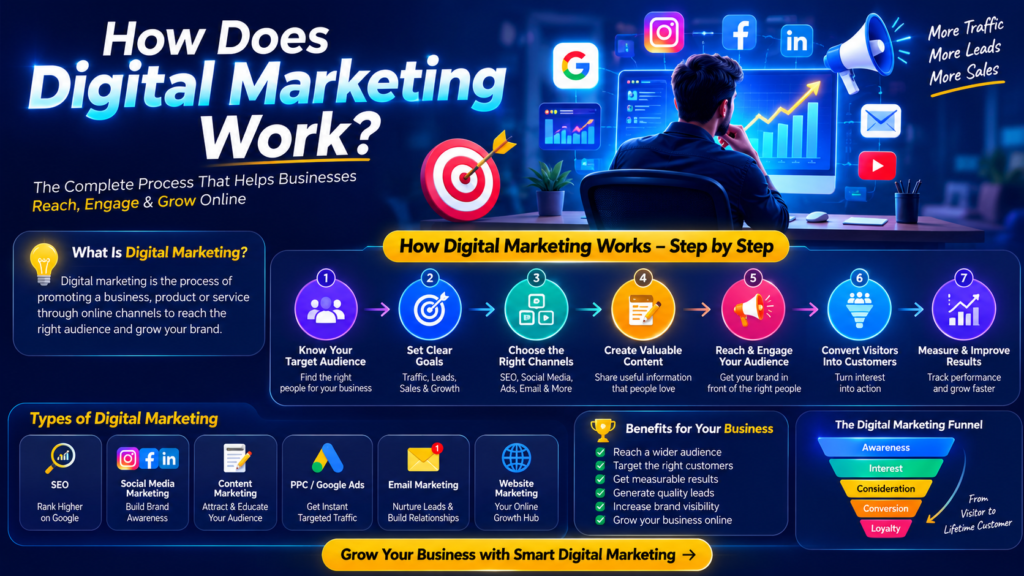
In today’s internet environment, one of the best methods for businesses to contact clients is through digital marketing. It uses digital channels such as search engines, social media, websites, email, and online advertising to promote products and services. Whether you run a small business, personal brand, or large company, digital marketing can help you build visibility and connect with the right audience.
What Is Digital Marketing?
Digital marketing refers to all marketing activities performed through digital platforms. Instead of depending only on traditional advertising, businesses can use online strategies to attract potential customers, build relationships, and increase sales.
A strong digital marketing strategy focuses on reaching customers where they spend their time—online. It also allows businesses to measure results and understand which campaigns are working.
Why Is Digital Marketing Important?
Digital marketing gives businesses an opportunity to reach a much larger audience without requiring a huge advertising budget. With the right strategy, even a small business can compete with established brands online.
Another major benefit is measurable performance. Businesses can track website visits, clicks, leads, conversions, engagement, and other important metrics. This information helps marketers improve campaigns and make better decisions.
Major Types of Digital Marketing
There are several important areas of digital marketing, including:
- Search Engine Optimization (SEO): Helps websites appear higher in search engine results.
- Content Marketing: Uses blogs, articles, videos, and other content to attract and educate audiences.
- Social Media Marketing: Promotes brands and engages customers through social platforms.
- Pay-Per-Click Advertising (PPC): Uses paid advertisements to generate targeted traffic and leads.
- Email Marketing: Helps businesses communicate directly with existing and potential customers.
- Website Marketing: Optimizes a website to attract visitors and turn them into customers.
How Does Digital Marketing Work?
Digital marketing usually starts with understanding the target audience. Businesses identify who their ideal customers are, what they need, and how they search for solutions online.
Next, marketers create valuable content and choose suitable channels to reach the audience. SEO can attract organic traffic, social media can increase engagement, and paid advertising can provide faster visibility.
The final step is analyzing performance. Marketers study data and make improvements based on the results. This creates a continuous process of attracting, engaging, converting, and retaining customers.
Benefits of Digital Marketing
Digital marketing offers several benefits for businesses. It can improve brand awareness, increase website traffic, generate leads, build customer relationships, and support sales growth.
It also provides flexibility. Campaigns can be adjusted based on audience behavior and performance. This makes digital marketing a practical choice for businesses of different sizes and industries.
Conclusion
For companies looking to expand online, digital marketing is now a must. From SEO and content marketing to social media and paid advertising, each strategy can play an important role in building a strong online presence.
With clear goals, consistent content, proper audience targeting, and regular performance analysis, digital marketing can help businesses reach more people and turn online visitors into loyal customers.